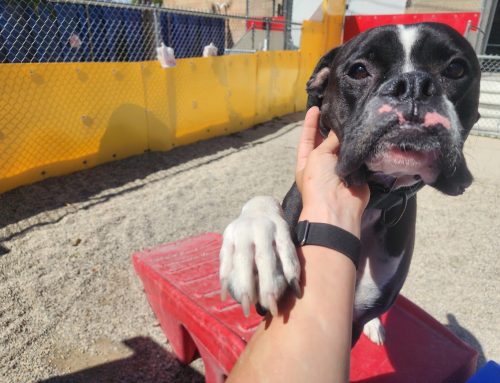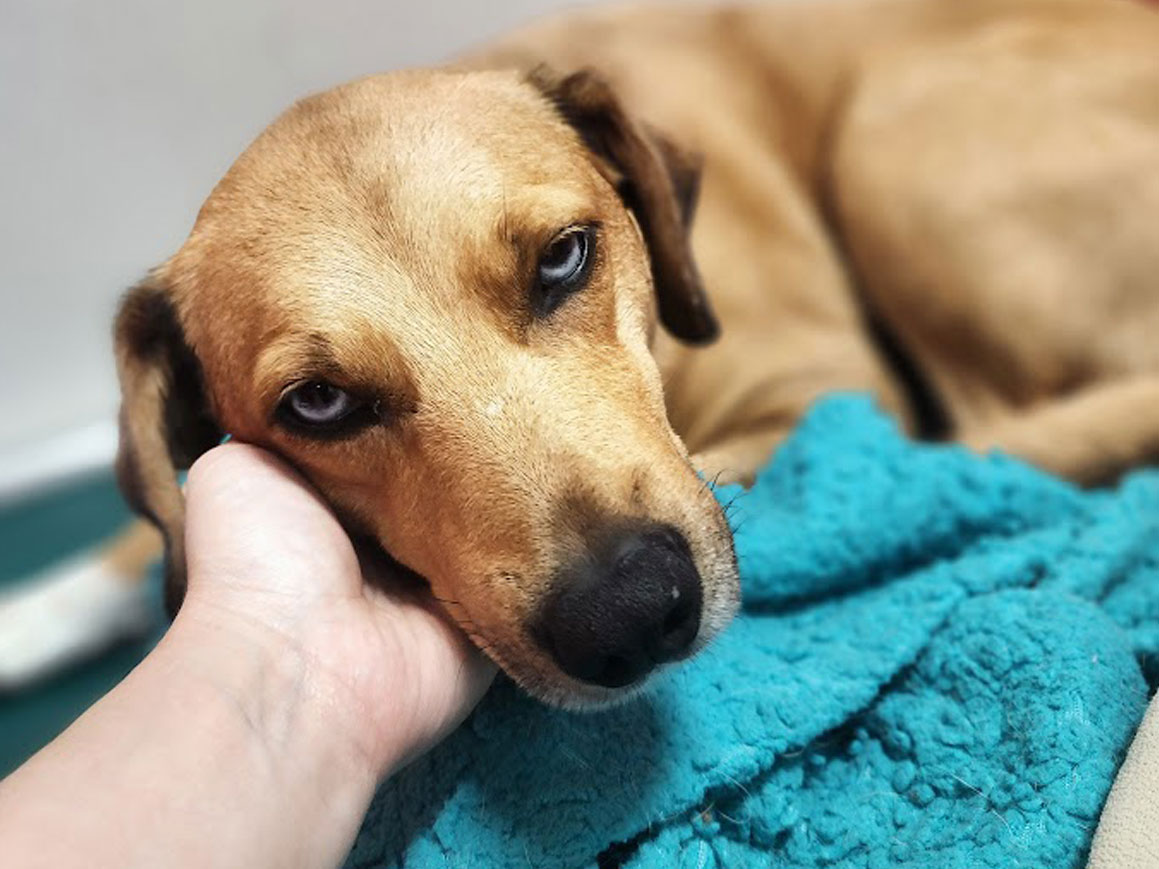
You may consider using calming aids to help your dog manage stress and/or anxiety in a variety of circumstances. I will detail the most common reasons and most effective products and methods. Thank you for thoughtfully considering your dogs needs – it is a true kindness.
When are calming aids helpful tools your dog?
- In times of high stress – like moving, remodeling, visitors, fireworks, thunderstorms, having a baby, getting a new pet.
- When your home routine changes – back to school, new work schedule, injury to human caretakers can all be very upsetting to dogs – they love established routines.
- During puppy and young dog fear phases – puppies typically go through fear phases at 8-10 weeks and again in adolescence anytime 6-14 months – when they are suddenly spooked by everyday things, or suddenly reactive on walks.
- After a trauma – rescue dogs teach us that trauma in dogs is as real and psychologically painful for dogs as it is for humans – if your dog went through a though time in a previous home, was neglected, hurt, injured, hoarded, emaciated, or victim of a natural disaster they will likely benefit from extra support to heal and overcome those challenges.
- During recovery from a medical procedure – it can be difficult to keep a dog on crate rest or to stop them from running and jumping while they heal after medical procedures.
- In response to behavioral challenges – like anxiety, reactivity, resource guarding. Sometimes, for whatever the reason, biology/chemistry/genetics – our dogs have serious behavioral challenges that need to be managed, and calming aids can assist in doing that safely. They can also help the dog be in a more conducive mindset for behavioral conditioning and desensitization training aimed at countering the behaviors.
Depending on your situation and your dog’s challenges, there is a continuum of calming aids you can try separately and/or layer together. Please always be open with your dog’s veterinarian and other caretakers about the issues you’re facing with your dog and the calming aids you are using to address those issues.
DAP Spray (Dog Appeasing Pheromones) – same pheromones that mother dogs emit – calms dogs and helps them feel more secure. Comes in collars (stays with your dog as they move about, potency is strong initially but slowly wears off) and also in a spray (less localized but more versatile). The spray can be applied to bedding, collars, bandanas, even your dog’s favorite plush toy. Available in pet stores and online.
Lavender Essential Oil – calming scent for dogs. Use in a diffuser, drop oil on collar/bandana/bedding and/or rub into paw pads. Can add to a carrier oil like almond oil or coconut oil for paw pad application. Get food grade Lavendar Oil if you intend to put it on your dog or on surfaces that they will be interacting with. Non-food grade oil is fine in a diffuser.
Thunder Jackets – work to help dogs feel secure by compression. It wraps around the whole body – pressing on several calming pressure points.
Tellington Touch – a hands-on therapy involving gentle massage on pressure points with specific movements that help dogs relax. Tellington Touch also shows people how to use compression wraps in various configurations to assist in calming animals. https://ttouch.com/our-method-for/dogs/why-tellington-ttouch-method-for-dogs/
Valerian Root – Calming Herb – reduces baseline stress levels (people often take it as a sleep aid or instead of prescription anti-anxiety meds). We use it here at BVB for stressed and reactive dogs and I use it at home with my dogs regularly. Many of my personal dogs and foster dogs have been somewhat reactive on leash and this helps them focus on me for better training walks. I have spoken with multiple vets about the use of this herb and am very comfortable in recommending it but reach out to your vet with any questions before trying it. I’d suggest trying half a human dose with a small dog, a human dose with a medium dog, or double a human dose with a large dog. It takes more than you’d think to have a noticeable effect on dogs, they seem to metabolize it quickly than humans. It usually takes 30-60 minutes for the full effect and lasts for 4 hours or so. It tastes bad, so try to keep it in the capsule and give it with something tasty like cheese or canned food. Available in pharmacies, grocery stores and online.
St John’s Wort can also be given to dogs for anxiety dogs, but it has a more long-term cumulative effect, so think of the St John’s Wart as an ongoing daily anxiety supplement. It should not be given with prescription anti-anxiety meds. Check with your veterinarian for dosing instructions.
CBD OIL – calming and relaxing all natural. May be of similar effectiveness to the Valerian Root from what I’ve seen in day care and boarding dogs. Animal versions are available in dispensaries and some pet stores. Animal versions have pet specific dosing guides and flavors that dogs and cats like. Some pet owners will have good luck by putting it directly in their dog’s food and others will use a syringe or dropper to get it directly into the dog’s mouth. I do recommend using the CBD oil rather than getting dog treats with CBD, as the oil is more effective and less likely to be accidentally given at a time it’s not intended or in a dose that’s not intended than the treats.
Fluoxetine – Reconcile / Prozac. A very reliable ongoing daily prescription for dogs with anxiety. Given daily, it takes 2 – 6 weeks to see the full effect of an ongoing dose. Not fast acting but it does give consistent relief from stress.
Clomipramin – Clomicalm. A tricyclic antidepressant (TCA) that is used to treat separation anxiety and obsessive behaviors (like tail-chasing or excessive licking). It may take 4-8 weeks to see the full effects of a regular daily dose. If you have tried Fluoxetine for your dog and have not seen the results you had hoped for, you may consider a change to Clomipramin.
Gabapentin – a prescription medication originally used to calm nerve pain is now commonly used to provide a calming and slightly sedative effect for dogs. This can be helpful for dogs with crate or kennel anxiety during bedtime hours but may leave a dog out of sorts during waking hours. It’s also beneficial in the case of a dog that is experiencing both pain (surgical, chronic, arthritis) and anxiety as it will work on both fronts simultaneously.
Trazodone – a SARI. Good anxiety med to use for occasional/situational needs, or when dosing is dependent on/varied by the scenario/activities. Faster acting – results in 30-60 minutes that typically last 8-12 hours. Helpful for boarding dogs with anxiety, storm and sound sensitive dogs, those stressed by company at the house. I have known some veterinarians to be comfortable prescribing low to moderate levels of Trazadone in conjunction with low or moderate levels of Fluoxetine for additional stress management during times when triggers are present/unavoidable and the base level of Fluoxetine isn’t providing adequate stress control.
Choose options that you feel comfortable with and that you can do realistically and reliably. Being consistent in your approach will give the best results. Keep a log or journal to record what you have tried, the frequency and/or dosing, what’s working and what’s not – it will be helpful to refer to this information when following up with your veterinarian and your pet care team. Finding the right calming aid or combination of calming aids for you and your dog can be a journey that takes time and experimentation, proceed with an open mind and give yourself and your dog some grace in the process.